Where to Place Water Leak Detectors: A Room-by-Room Guide
A water leak detector can only warn you about water that reaches its sensing contacts. Placement matters at least as much as the number of alarms you buy. This guide explains where to start, how to avoid common mistakes, and when additional protection makes sense.
Quick answer: start near hidden water connections
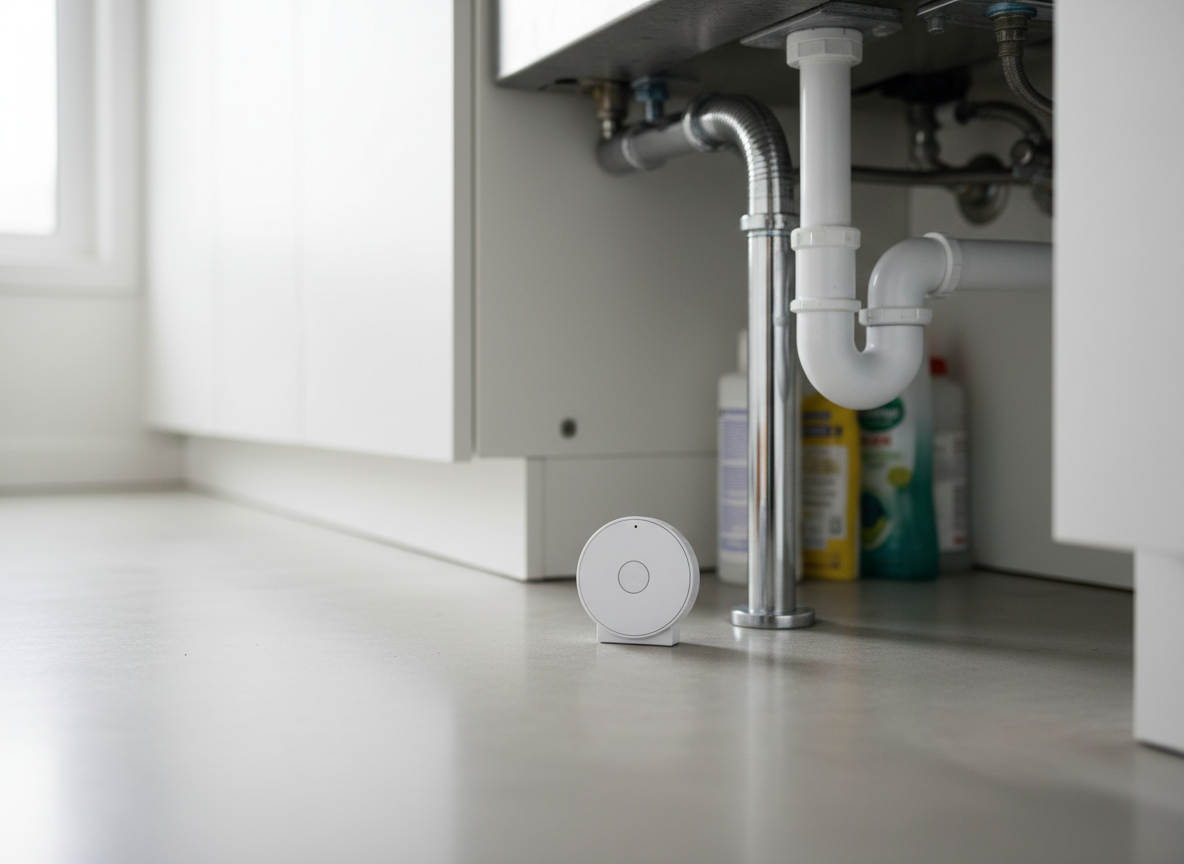
- Under the kitchen sink, near supply stops, drain connections, and the cabinet floor’s likely low point
- At washing machine supply connections and the area where water would collect
- Near the water heater and any accessible drain pan, without blocking service access
- Under bathroom vanities where leaks could remain hidden
- Near dishwashers and refrigerator ice-maker connections when a sensor can be positioned safely and remain accessible
- Near indoor air-conditioning condensate equipment if a leak could damage finished spaces
Kitchen: sink, dishwasher, and refrigerator
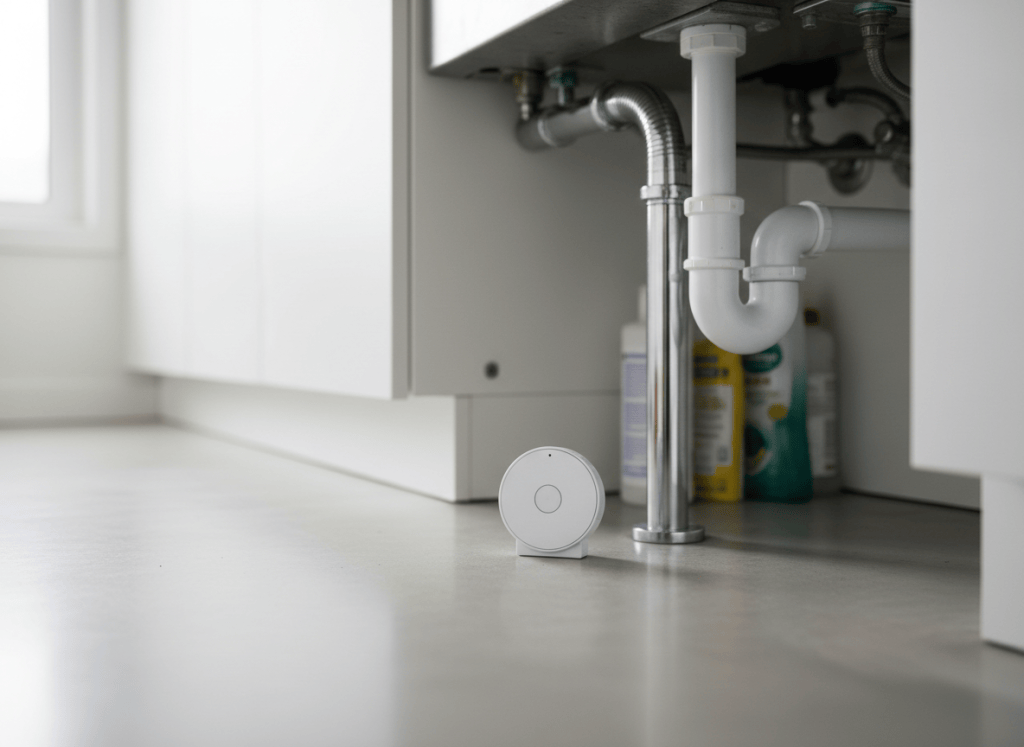
Under a sink, look for a level or low spot where a supply-line or trap leak would reach the sensor. Keep it out of places where routine splashes trigger nuisance alarms. Dishwashers and refrigerator supply lines may leak behind appliances; use a suitable remote sensing cable or accessible location when the device instructions allow it. Never pinch wires or obstruct appliance ventilation.
Laundry room
A washing machine can leak at hoses, fittings, its drain connection, or the machine itself. Put a sensor where escaped water is likely to collect, not simply next to the appliance. If the floor slopes toward a drain, consider how that changes the best detection point.
Water heater
Look for the path water would take from the tank, fittings, or drain pan. Position the detector according to the manufacturer’s instructions and keep it clear of hot surfaces, electrical parts, combustion air openings, and required service clearances. An alarm detects water at its location; it cannot prevent every leak.
Bathrooms
Vanity cabinets are common hidden-leak locations. Position sensors on the cabinet base near likely leak paths. Where bathrooms have multiple separate water sources, one sensor may not cover them all.
HVAC and condensate areas
An indoor cooling coil produces condensate that must drain. An overflow pan or condensate pump problem can cause damage. A compatible leak sensor may provide additional notification, but it does not replace a correctly installed condensate safety switch, drainage system, or professional maintenance.
How many sensors do you need?
There is no universal number. Start with the most consequential water sources and add sensors for separate locations where one alarm cannot detect water from another. Floor slope, barriers, device range, and alert reliability all affect coverage. For a home with a kitchen sink, laundry machine, water heater, and two separate bathroom vanities, five detection points may be a reasonable initial checklist—not a guarantee of full protection.
What to check before buying
- Alert method: local audible alarm, app notifications, or both
- Connectivity: whether alerts work during Wi-Fi or internet outages
- Power: battery type, battery-life claims, and low-battery alerts
- Placement: floor contact design, extension probes, and sensing cables
- Compatibility: required hub, subscriptions, and integration with any automatic shutoff system
Common mistakes
- Placing a sensor on a high spot where water flows away from it
- Assuming a connected sensor will send remote notifications during an internet outage
- Failing to test alarms and replace batteries as instructed
- Using a leak alarm as a substitute for inspecting hoses, fittings, and drains
- Positioning equipment where it interferes with safe access or appliance operation
A simple maintenance routine
After installation, record each sensor’s location, test it according to its manual, and periodically confirm the device can alert you. Check high-risk connections for visible moisture or corrosion. Reassess placement after appliance changes or renovations.
Safety and scope
If water is near energized equipment, avoid contact and seek qualified assistance. Do not bypass HVAC safety controls or attempt hazardous electrical or plumbing work. Follow equipment instructions and local requirements. This guide provides general education, not a guarantee against water damage.
Editorial note: This first version does not contain affiliate links or claim hands-on product testing. Product-specific recommendations will be added only after verification.


Leave a Reply